Speakers

More speakers will still be added.
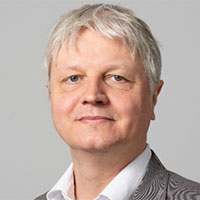


Jan Brase, University of Göttingen
Germany

Jan Brase has a degree in Mathematics and a PhD in Computer Science from the University of Hannover, Germany. From 2005 he was coordinating the research issues in the field digital libraries for the German National Library for Science and Technology (TIB). He established the founding of the international consortium DataCite in 2009, a global consortium of libraries and information institutions to support the publication and citation of research data. He was head of DataCite until 2015 when he became head of research and development at the Goettingen State and University library (SUB). At SUB Jan Brase is also the scientific director of the eResearch-Alliance, the central coordination office off all research data related services on campus.

Dr. Brase is President of the International Council of Scientific and Technical Information (ICSTI). In 2011 he received the German Library Hi-Tech award.

Presentation: The German National Research Data infrastructure (NFDI) and the role of SUB Göttingen
The NFDI (Nationale Forschungsdateninfrastruktur, or National Research Data Infrastructure) is a joint initiative by the German federal and state governments to systematically manage, network, and long-term store scientific research data across all academic disciplines. It operates as a decentralized network of subject-specific consortia. 26 discipline based consortia are funded by the German government with 90 million Euros every year. The SUB Göttingen has always been very active for RDM services in the humanities and as such we are participating in all 4 humanites NFDI consortia and are the leader of Text+ the consortia for text data. In this presentation we will introduce the NFDI in more detail and learn about the current plans for its future and the affect it has on libraries in Germany in general and the SUB Göttingen specifically.


Jan Černý, Faculty of Informatics and Statistics, Prague University of Economics and Business
Czech Republic

Prague University of Economics and Business fellow and researcher focused on the intelligence studies, particularly on the CI, TECHINT, OSINT domains. Dr. Jan Černý‘s research activities cover topics on external data and information environment analysis of enterprises, early warning systems, surface web & deep web investigations, search strategy and tactics, and digital forensics. He also deals with public librarianship management, specifically on the role of libraries in today’s competitive environment.

Presentation: Applied AI in Open-Source Intelligence (OSINT): Opportunities, Challenges and Risks
Artificial intelligence has changed how open-source intelligence (OSINT) is collected and analysed. Practitioners now use AI-driven tools for search, translation, transcription, image analysis and entity extraction. They test new models as soon as they are released and build working prototypes in a fraction of the time this once took. The momentum is extraordinary. The problems, however, have followed just as quickly. The web is increasingly flooded with low-quality synthetic content (“AI slop”), models produce plausible but unfounded claims, and adversaries can manipulate the sources analysts rely on. As a result, validation and verification are more difficult than ever. This lecture examines the opportunities, challenges and risks of applying AI across the OSINT cycle, from collection to reporting. Using practical examples, it shows where AI adds value, where it fails, and which verification practices and legal safeguards (GDPR, EU AI Act) analysts need to keep their findings reliable.


Tomáš Foltýn, National Library of Czech Republic
Czech Republic

Tomáš Foltýn is the graduate of the Faculty of Arts of the University of Pardubice, where he completed his master studies in the field of cultural history in 2008. Since 2007 he worked in the Digitization Department of the National Library of Czech Republic, first as Project Manager, then as the Head of the Metadata Creation and Management Department. In January 2013, he was appointed as Collections´ Management Division Director. On May 1st 2021, he became the General Director of the National Library of the Czech Republic.

Tomáš Foltýn was involved in various national and international research projects, is an expert guarantor of the Ministry of Culture of the Czech Republic VISK 7 Funding Mechanism, the regular member of the Central Library Council of the Czech Republic, CENL Executive Committee Member etc. From the professional perspective, he is interested especially in the area of the effective collections´ management and long-term preservation of the modern collections including the digital content. During last years, he started to be involved also in various activities connected with digital humanities, R&D projects and cultural diplomacy.


Tomáš Foltýnek, Masaryk University
Czech Republic

Dr. Tomáš Foltýnek is an assistant professor at the Department of Machine Learning and Data Processing and AI Ambassador of Masaryk University, Czechia. He is President of the Board of the European Network for Academic Integrity. He is also vice-chair of the Bureau of the Council of Europe’s Pan-European Platform for Ethics, Transparency, and Integrity in Education (ETINED) and head of the Working Committee on Ethics in Scientific and Pedagogical Work within the Council of Higher Education Institutions in Czechia.

His research focuses on plagiarism detection and prevention, academic integrity policies, and the ethical use of artificial intelligence in education. He has led several national and international projects on academic integrity, namely plagiarism prevention.

Presentation: AI Ethics and Ethical Use of AI in Institutional Practice
Generative AI raises ethical questions that universities have to answer in daily practice: What counts as acceptable use in teaching and assessment, how to disclose AI assistance in research, how to protect personal data, and how to deal with tools such as unreliable AI-text detectors. Drawing on my work as AI Ambassador at Masaryk University, president of the European Network for Academic Integrity, and on the Council of Europe’s ETINED platform, this talk turns ethical principles into concrete institutional measures in education and science. It also shows how librarians, who already have expertise in information literacy, citation analysis, and research integrity, can lead their institutions toward responsible AI use.


Bela Gipp, University of Göttingen / Göttingen State and University Library and Frederic Kirstein, GippLab / Göttingen State and University Library
Germany

Prof. Bela Gipp (Dr.-Ing.) holds the chair for Scientific Information Analytics at the University of Göttingen, Germany, and is the Director of Research at the Göttingen State and University Library (SUB).

His research interests lie at the intersection of Information Science and Data Science. His group’s research focuses on developing and applying Natural Language Processing techniques and methods for retrieving, analyzing, and visualizing information in large datasets. The implications of blockchain technology—for the benefit of both industry and society—are another research domain that Bela is passionate about.

Previously, Bela was a full professor at the University of Wuppertal from 2018 to 2022 and a junior professor at the University of Konstanz from 2015 to 2018. He completed his Ph.D. in computer science (summa cum laude) at the University of Magdeburg in 2013. He conducted most of his doctoral research abroad while on a 4-year research scholarship at the University of California, Berkeley. While at UC Berkeley, he also used its proximity to Silicon Valley to found the tech start-up SciPlore and co-found Docear. After his Ph.D., he received postdoctoral research fellowships at U.C. Berkeley and the National Institute of Informatics in Tokyo.

Bela has published over 200 peer-reviewed conference papers and journal articles, as well as several books and patents, which have received more than 10,000 citations; his h-index is approximately 50. He currently leads eleven DFG-funded projects and serves as a DFG-nominated member of the Digitality in Science Initiative of the Alliance of Science Organizations in Germany. He has secured over 11 million EUR in third-party funding and venture capital investments for his research thus far.

Dr. Frederic Kirstein’s main research interests are interactive and proactive AI assistants that work with users over a whole conversation and adapt to them. He is a senior researcher at GippLab and the Göttingen State and University Library (SUB), where he leads the research in the DFG-funded LibraryAI project, which develops a virtual research assistant for the SUB. He received his Ph.D. in computer science from the University of Göttingen as an industrial doctoral researcher at Mercedes-Benz AG, where his work on meeting summarization contributed to production features such as MBUX Notes. He has published at ACL, EMNLP, COLING, and JAIR.

His research spans the fields of:

  • Natural Language Processing
  • Interactive AI
  • Personalization and User-Adaptive Agents
  • Dialogue and Meeting Summarization
  • LLM-based Evaluation

Presentation: LibraryAI: Building a Virtual Research Assistant for the Göttingen State and University Library
Library catalogs and discovery systems work well when users know which work or topic they are looking for. Many questions people bring to a library are more open, such as “What do you have on libraries and democracy?”, and answering them requires reading the material, clarifying what the person means, and pointing to sources. LibraryAI is a three-year project funded by the German Research Foundation (DFG) in which the Göttingen State and University Library (SUB), the University of Göttingen, and the GWDG computing center develop a virtual research assistant for the SUB. The assistant searches the library’s catalog, metadata, and full texts before it answers, cites the passages it relied on, asks follow-up questions when a request is unclear, and handles queries in several languages. In this talk, we present the system architecture and the current prototype. We discuss current problems we are working on and show how librarians’ subject expertise and user feedback feed into the system.


Megan Gooch, Bodleian Libraries / Oxford university and Neil Jefferies, Open Preservation Foundation / Oxford university
United Kingdom

Megan Gooch is the Head of the Centre for Digital Scholarship at the Bodleian Libraries, University of Oxford. She has worked in museum and heritage roles as a curator and producer. Her library work and research focuses on research data management, digitisation, digital skills and AI.

Neil Jefferies is Executive Director of the Open Preservation Foundation, a Director of Data Futures GmbH and a Digital Innovation Specialist at the Bodleian Libraries, University of Oxford. He is a co-creator of the International Image Interoperability Framework and the Oxford Common File Layout, Community Manager for the SWORD protocol and a member of the Bit List Council for the Digital Preservation Coalition. His research interests include knowledge and information models, APIs for enhancing access to digital resources, digital preservation and long-terms access, and the mechanisms of digital scholarship. He teaches on various topics on Oxford’s MSc in Digital Scholarship and the Digital Humanities Summer School.

Presentation:The possibilities and pitfalls of working with big tech: the Oxford experience
In this paper we’ll talk about why and how the Bodleian Libraries, University of Oxford, has worked with several big tech companies in recent years. In short, it has enabled us to digitise and make available our collections at a scale unachievable through other workflows and funding models. But what do libraries gain, or lose, from working in partnership with vast multinational companies? We reflect on both the technical affordances of our work – what partnerships have allowed in terms of research and digitisation, but also the cultural challenges of innovation, working with AI, and staff, reader and public critiques of such collaborations.

Presentation: Crafting Effective Standards and Guidelines: The N-RICH DCP Project
N-RICH is the UK National Research Infrastructure for Cultural Heritage, which is at an early prototyping stage. The Bodleian Libraries at the University of Oxford, with support from the Open Preservation Foundation, is subcontracted to run the Digitisation Capabilities Pilot aspect of the protoype. One of the deliverables is a set of standards and guidelines for Cultural Heritage digtisation in order to meet the Research Infrastructure requirements. This talk will discuss how we approached this task, drawing on past experiences with IIIF, OCFL, SWORD and other standards initiatives.


Sanna Haukkala, The National Library of Finland
Finland

Sanna Haukkala is the Information Specialist at The Legal Deposit Services of The National Library of Finland. Sanna has an extensive work history with legal deposits, starting from printed legal deposits, music recordings and the ephemera collection since 2013 and she has worked mostly with the content of The Finnish Web Archive since 2017. She has a MA from Cultural Studies (Sociology of Art) with additional studies from Information Science and Interactive Media, and Museology.

Presentation: When the National Library Preserves the internet, what is being preserved, and why, for the future?
Since 2006 The National Library of Finland has had a legal right to preserve Finnish content from internet and from 2008 the legal obligation to harvest Finnish internet and content intended for Finnish audiences. The Legal Deposit Services has preserved printed Finnish publications in cooperation with the publishing industry for many centuries even before this. The National Library of Finland is also one of the founding members of International Internet Preservation Consortium (IIPC), that was founded in 2003 to gather and share knowledge between institutions that are doing web archiving.

The National Library of Finland have guidelines how online content have to be selected and preserved, to be ensured to be available to the future generations. The selected materials must first be able to be harvested, then preserved in a way they can be provided to users at the legal deposit workstations, and finally also ensure the digital preservation of the materials. These guidelines steer the work to the direction that The National Library of Finland can to provide a representative and diverse sample of Finnish online materials, but do we know who are the future users and how they’d want to utilize our materials?

Besides web archiving, preserving online materials includes also e-legal deposits, that are collected as e-books, e-journals, music recordings, sheet music and such. But while our mandate has been quite the same for over twenty years, the internet has changed drastically. What is the reason why we are still doing the same work while trying to keep up with changing online content, technical development, and massive changes in the publishing industry? This presentation will share some of the challenges considering preserving online materials and questions that are not anymore whispers between the library bookshelves.


Youness Hourri, Libraries of Université libre de Bruxelles
Belgium

Youness Hourri is a software engineer at the Libraries of Université libre de Bruxelles. He specialises in building research infrastructure, with a particular interest in open science, research data management, digital humanities and digital preservation. He contributes to the development of an open-source repository for managing and archiving research data. In addition, he also develops an advanced monitoring solution for LOCKSS distributed preservation networks. His work aims to make these systems more open, reliable and easier for institutions to maintain over time.

Presentation: Breaking Down Data Silos: An RDF Ecosystem to Mutualize Humanities Research Projects Needs
For many humanities researchers, managing the structured data collected or produced as part of their research projects is a technical challenge.

In the past, the services of external service providers have been heavily relied upon for this purpose, resulting not only in high costs but also in a large number of isolated data silos scattered all over the university’s servers, which are usually not maintained professionally and quickly become obsolete. In this presentation, we present an original solution to this problem, deployed at the Université libre de Bruxelles by Præsto, the digital humanities support platform working closely with the libraries. It consists in the deployment of a shared RDF ecosystem within which all humanities researchers can integrate their databases, which then become sub-graphs of the global knowledge graph. The long-term maintenance, training and support associated with such an ecosystem are then mutualized and thus greatly facilitated. We will discuss the implemented solution, its key advantages and trade-offs, and the practical challenges we encountered along the way.


Martin Lhoták and Filip Kersch, Library of the Czech Academy of Sciences
Czech Republic

Martin Lhoták is Deputy Director for Research, Development, and Technology at the Library of the Czech Academy of Sciences, where he has worked since 1997. He previously led the library’s IT department, established its Digitization Center and served as Director from 2007 to 2017.

His work focuses on development of open-source tools for digitization, digital libraries, and long-term preservation, including Kramerius system, ProArc and ARCLib. He has coordinated major national initiatives, including the Czech Digital Library and the Central Portal of Czech Libraries, and helped establish the Academy’s open access policy and institutional repository. He currently coordinates the development of the ASEP/ARL repository system for research data within the EOSC-CZ National Repository Platform project.

As the Czech National Coordinator for DARIAH ERIC, he is actively involved in digital humanities projects, with a particular focus on developing research tools and information infrastructures that connect library collections with scholarly research.

Filip Kersch specializes in digital libraries, long-term preservation and metadata production systems. As Head of the Digital Library Department at the Library of the Czech Academy of Sciences, he leads work on making library collections more accessible and reusable. He is active in national and international projects in digital preservation, open access publishing and the use of library collections as data.

Presentation: Making Library Collections Research Ready – From Digitisation to Research Data
The ELC-DHLR (Enhancing Library Collections for Digital Humanities and Language Research) project is collaborative initiative between Czech and Swiss infrastructures CLARIN and DARIAH that addresses the need to make the vast resources of digitised library collections truly usable for advanced scholarly research. While major digitisation programmes over the past decades have created millions of digital objects across Europe, researchers in the Digital Humanities and language sciences still encounter fundamental barriers: inconsistent OCR quality, minimal metadata, interfaces aimed primarily at casual readers, and a lack of integration with modern analytical environments.

At the same time, technological advances are opening unprecedented opportunities. AI, particularly in the form of LLMs, has matured to the point where automated summarisation, semantic search, and intelligent exploration of collections are now achievable. Linguistic research and corpus analysis infrastructures such as the Czech National Corpus and the LiRI Corpus Platform provides in the framework of ELC-DHLR project powerful linguistic tools that can be connected with digitised library holdings.


Adam Matysiak, National Library of Poland
Poland

Adam Matysiak is senior librarian at the Cataloging Department of the National Library of Poland, currently coordinating the team responsible for cataloging publications on the arts. Working with the National Library of Poland since 2024, Adam has been involved with the implementation of artificial intelligence into the National Library’s cataloging workflow since 2025. He has a double MA in philosophy and art history and is pursuing a PhD in philosophy.

Presentation: Integrating the Alma AI-Metadata Assistant into the 24-hour Cataloging Workflow at the National Library of Poland
The National Library of Poland implements a 24-hour cataloging workflow, wherein the receipt of legal deposit copies is to be cataloged within 24 hours of arriving at the cataloguing person’s workstation. In 2025, a team consisting of members of the Cataloging Department coordinated the implementation of artificial intelligence solutions (the Alma AI Metadata Assistant) into this workflow. Based on my experiences as a member of the team, I am going to present the challenges of implementing the usage of artificial intelligence in the cataloging workflow and the changes to the workstation and cataloging process that were introduced to overcome these challenges.


Norman Meuschke, GippLab / University of Göttingen
Germany

Dr. Norman Meuschke is a senior researcher at the Scientific Information Analytics Group (GippLab) at the University of Göttingen and the Göttingen State and University Library (SUB), Germany. His research focuses on artificial intelligence and information retrieval, with a particular emphasis on developing intelligent methods for analyzing and connecting complex information. He is currently involved in several interdisciplinary research projects exploring innovative AI applications across various domains. He completed his Ph.D. in computer science (summa cum laude) at the University of Konstanz. His doctoral research on AI-assisted plagiarism detection was recognized with the Airbus Research Award. He additionally held research positions at the University of Wuppertal, the National Institute of Informatics in Tokyo, and the University of California, Berkeley, where he also co-founded the technology start-up SciPlore. He has authored more than 60 peer-reviewed scientific publications, attracting over 3,000 citations and achieving an h-index of 32.

Presentation: AI in Museums: Connecting Cultural Heritage Through Intelligent Metadata Enrichment
How can artificial intelligence unlock the hidden potential of museum collections and open new ways of exploring cultural heritage? This question lies at the heart of AI in Museums, a collaborative research project that brings together researchers and practitioners from the Scientific Information Analytics Group (GippLab) at the University of Göttingen, museums, universities, libraries, and library infrastructure providers.

The project explores how AI can make museum collections more accessible, searchable, and interconnected. Its research spans AI-assisted provenance analysis, automated object classification, and semantic metadata enrichment, helping researchers discover relevant objects and uncover connections across collections and knowledge sources. Within the project, the GippLab team develops LLM-powered methods to enrich object metadata by extracting information from scientific publications, archaeological excavation reports, and other historical sources. By linking museum objects to external knowledge sources, these methods aim to enable new forms of exploration, interpretation, and scientific discovery.

In this talk, Norman Meuschke will introduce the project’s objectives, highlight its progress to date, and outline upcoming developments and future research directions, with particular emphasis on GippLab’s research on AI-driven metadata enrichment.


David Minor, UC San Diego Library
USA

David Minor works at the University of California, San Diego, where he is the Director of the Research Data Curation Program in the UC San Diego Library. In this role he helps define and lead work needed for the contemporary and long-term management digital resources. His position includes significant interaction with stakeholders on the UC San Diego campus, throughout the UC System, and national initiatives. His program also includes management of Chronopolis, a national-scale digital preservation network.

Presentation: AI in Research and Education: Current Trends in the United States
Based on a wide literature scan of outputs over the last 18 months, this presentation will explore the major themes emerging on Artificial Intelligence in academic institutions in the United States. Focal points include policy and assessment, usage challenges and successes, pedagogical concerns, and questions of trust.


Jan Rychtář, Trinera s.r.o.
Czech Republic

Jan Rychtář has more than fifteen years of experience developing software for libraries and has been involved for many years in the development of Kramerius, the Czech digital library platform.

He is the co-founder and director of Trinera, where he leads a team building systems primarily for libraries, archives and other memory institutions, with a strong focus on automation, access to digital collections and the practical use of artificial intelligence.

Presentation: Liberio: A Digital Library Built for the AI Era
Liberio is a new digital library built from the ground up on modern technologies for processing, discovery and presentation of digital collections.

Rather than adding AI capabilities to an existing architecture, Liberio takes today’s technological capabilities as a starting point for the design of the entire digital library. Semantic and multimodal search, computer vision, speech recognition, machine translation, generative AI and automated content enrichment are not separate add-ons, but are embedded throughout the way content is processed, structured and presented to users.

Documents are not simply ingested and indexed. Liberio extracts text and structure, identifies articles, images, people, places and topics, processes speech and music, and connects the resulting information so that it can be used directly for search, exploration and interaction.

Books, newspapers, maps, images, sheet music, audio, video and 3D objects are brought together within one environment, while each medium has tools and interfaces adapted to its specific characteristics.

One of Liberio’s core principles is to give curators direct control over the whole digital library without dependence on technical staff.

The presentation will first demonstrate the full range of Liberio’s capabilities across different document and media types. It will then show examples from production instances already in active use, including how this approach has simplified operation and content management, opened up new ways of working with collections, and enhanced the experience offered to users.

Finally, the presentation will reflect on how the current pace of technological change may affect libraries in the years ahead, and what it may require from them to operate, develop and continuously adapt their digital libraries.


Moritz Schubotz, FIZ Karlsruhe – Leibniz Institute for Information Infrastructure
Germany

Dr. Moritz Schubotz heads the Research and Projects Mathematics department at FIZ Karlsruhe – Leibniz Institute for Information Infrastructure. His research focuses on decentralized information infrastructure and methods that make scientific knowledge more accessible to humans and machines. His work connects mathematical information retrieval, AI, and open research data, including contributions to Wikimedia technologies.He contributes to the W3C Math Working Group and to research infrastructure initiatives within Germany’s National Research Data Infrastructure (NFDI) and the European Open Science Cloud (EOSC). These activities connect open standards for mathematical content with practical services for discovering and reusing research data and software.He studied physics before earning his PhD in Computer Science from TU Berlin. His international research experience includes a postdoctoral fellowship at the National Institute of Informatics (NII) in Tokyo and an ongoing role as an off-site collaborator at the US National Institute of Standards and Technology (NIST), which began in 2014.

Presentation: Beyond Trust: AI, Formal Proof, and Decentralized Open Science
Reproducibility crises, paper mills, and the growing volume of AI-generated scientific text make it increasingly difficult to assess the reliability of scientific publications. Access to a publication alone is insufficient to check its claims. Open science also needs access to the evidence, methods, and dependencies that allow others to inspect and reproduce a result.Mathematics offers a particularly clear starting point. Its explicitly stated objects and assumptions make it especially suitable for formal proofs that computers can check. AI can help construct these proofs, while a separate proof checker verifies whether they establish the stated claim. The broader principle of independently checkable research extends across science: research outputs can include the information required to check and reproduce their results, such as executable analyses or traceable data transformations.This presentation explores a zero-trust approach to decentralized open science, in which claims are checked independently of their source. Drawing on experience with Wikimedia technologies and mathematical research infrastructure, it considers a shift from publications toward nanopublications: individual, identifiable claims with explicit provenance, connected to supporting evidence. A knowledge commons can connect these claims and their dependencies across independently governed resources, making them available for inspection, correction, and reuse. AI can help us retrieve relevant knowledge without knowing the right keywords, automate routine tasks, and reduce errors during software development. Libraries can help connect the resulting claims with the evidence and methods required to check and reproduce them.


Péter Váradi, L’Harmattan
Hungary

Péter Váradi, PhD, is Editor-in-Chief of L’Harmattan Publishing House in Budapest. He holds a PhD in Philosophy from Eötvös Loránd University (ELTE), Budapest. His work combines academic publishing, research and scholarly communication, with a particular focus on the changing role of scholarly books in the Humanities and Social Sciences. As Editor-in-Chief, he is responsible for content development and for building and maintaining the publisher’s domestic and international academic partnerships.

He is closely involved in the development of L’Harmattan Open Access and the openaccess.pub platform, which aims to create an internationally connected publishing environment for scholarly books. The initiative focuses on multilingual scholarly communication, rich metadata, international dissemination and archiving, and AI-assisted tools that improve the discovery of longform research across languages. Its broader ambition is to strengthen the international visibility of Central European Humanities and Social Sciences research.

Péter is particularly interested in sustainable institutional models for Open Access book publishing and in developing closer cooperation between publishers, libraries and research-performing organizations. A central concern of his work is how digital publishing infrastructures can preserve multilingualism and the scholarly monograph as a major research output while connecting locally produced research more effectively to the international scholarly communication system.

Presentation: Open Is Not Enough: Connecting Scholarly Books to the Research Infrastructure
A scholarly publication may be technically open and still remain largely invisible. For longform and multilingual scholarship, open access therefore requires more than placing a PDF on a website or in a repository: publications also need to be identifiable, discoverable, preserved and interoperable.

The presentation introduces the collaborative model developed around L’Harmattan Open Access and openaccess.pub. Rather than concentrating the entire publication workflow in one organisation, the model connects the academic governance of research institutions, the metadata and preservation expertise of libraries, the production and dissemination capacity of a publisher, and international Open Science infrastructures.

The presentation shows how rich metadata, persistent identifiers and interoperability allow scholarly books to move into wider research and library environments through services such as Crossref, Thoth Open Metadata, OAPEN, DOAB and OCLC, while institutions retain academic control.

Finally, our participation in the GRAPHIA Industry Hub points towards the next stage: moving from interoperable publications towards structured references, entities, relationships and knowledge graphs.

Open is necessary, but open is not enough. Scholarly books also need to be quality-controlled, interoperable and connected.


Anna Wałek, Laura Bandura-Morgan and Roksana Wilk, OAPEN
Poland

Dr Anna Wałek is an international expert in Open Science, scholarly communication and digital research infrastructure, with more than 20 years of experience spanning academic libraries, research information management, digital transformation and European research infrastructures. She is currently Head of Technology (CTO) at the OAPEN Foundation and the Directory of Open Access Books (DOAB), where she leads the technological development of international infrastructures supporting the discovery, accessibility, interoperability and long-term availability of open scholarly books.

Her career combines strategic leadership with practical experience in transforming how universities and research organisations manage, share and provide access to knowledge. She previously held senior leadership positions in academic libraries and has been actively involved in European Open Science and research infrastructure initiatives, including OPERAS and EOSC-related activities. She also served as President of the International Association of University Libraries (IATUL).

Her work focuses on the intersection of Open Science, knowledge infrastructure, metadata and interoperability, governance and digital transformation. She is particularly interested in how trusted, sustainable and community-governed infrastructures can help universities and research organisations make scholarly knowledge more visible, connected and reusable, and how these infrastructures need to evolve in an increasingly AI-mediated research environment.

Anna is a frequent speaker and panellist at international conferences on Open Science, scholarly communication and the future of research and knowledge infrastructures.

Presentation: Who Sets the Rules? AI Policy and the Future of Open Science


Alicia Wise, CLOCKSS
United Kingdom

Alicia Wise is Executive Director of CLOCKSS, where research libraries and academic publishers come together to ensure the long-term preservation of the scholarly record. She has been active in increasing access to research information in roles within the academic, library and publishing communities.

Presentation: Who will protect the eBooks?
How many books are published each year, and where are they being preserved for future generations? In 2026, these deceptively simple questions remain surprisingly difficult to answer and particularly for eBooks.

The preservation challenge for books is not simply a smaller version of the challenge for scholarly journals. eBooks involve different communities of stakeholders, distribution models, formats, identifiers, metadata, platforms, and rights arrangements. Much of the infrastructure and cooperation that has developed to preserve eJournals therefore does not translate directly to books.

This presentation will examine what makes eBooks particularly challenging to preserve, and what is already being done to reduce those risks. We will look at emerging projects, services and models for long-term preservation and access, and consider the roles that libraries, infrastructure providers, publishers, standards organisations, and other stakeholders can play.
The scale and international nature of the challenge make cooperation essential. Europe is particularly well placed to help shape a more coordinated approach, connecting national and institutional initiatives with global infrastructure and expertise.

During this session we will explore what a more global and resilient preservation environment for books could look like, and what practical steps we can take now to build it.


Petr Žabička, Moravian Library, Filip Bím, Moravian Library and Jan Rychtář, Trinera s.r.o.
Czech Republic

Petr Žabička is an expert in library automation with experience in digitisation, digital libraries, and machine learning. As an associate director at the Moravian Library, he is responsible for research and development projects. Currently, his activities focus on implementing machine learning technologies to enhance access to digitised documents. He has been involved in the PERO project, which aimed to improve the accuracy of digitised texts through the application of machine learning algorithms to optical character recognition (OCR). Previously, he led projects related to map digitisation, online access to digitised maps, and the development of the Czech library portal Knihovny.cz.

Filip Bím specializes in machine learning, OCR and computer vision, with a focus on the analytical applications of artificial neural networks. As Head of the Digital Document Management Department at the Moravian Library, he leads projects that integrate machine learning into library workflows. His team develops tools that apply modern AI methods to digitization, data processing, and the accessibility of digital collections. His work aims to make these methods practical for libraries and cultural heritage institutions.

Jan Rychtář has more than fifteen years of experience developing software for libraries and has been involved for many years in the development of Kramerius, the Czech digital library platform.

He is the co-founder and director of Trinera, where he leads a team building systems primarily for libraries, archives and other memory institutions, with a strong focus on automation, access to digital collections and the practical use of artificial intelligence.

Presentation: From Scan to Archival Package: Automating the Digitisation Workflow
Digitisation involves many processing steps beyond scanning itself. Many of these are traditionally performed manually, especially image cropping, identifying document boundaries, and creating structural metadata.

Using a large collection of broadside ballads as a case study, we present an automated workflow covering the entire process from raw scans to a validated archival package.

Broadside ballads represent a particularly challenging type of material: they are usually very short, often only four or eight unnumbered pages, and may also be bound together in composite volumes. For efficient digitisation, large batches are therefore scanned sequentially without identifying individual documents during scanning.

The subsequent processing is largely automated. Scans containing two facing pages are detected and split into individual page images, which are then cropped and deskewed. Large sequences consisting of thousands or tens of thousands of pages are subsequently analysed and divided into individual documents. The workflow reconstructs their internal structure, detects potentially missing, duplicated, or incorrectly assigned pages, and can also preserve or identify relationships between documents that belong together.

The workflow combines AI-based methods with conventional algorithmic processing to automate image processing, OCR, bibliographic metadata processing, structural metadata generation, and quality control. Existing bibliographic records are retrieved from the library catalogue, transformed into the required target formats, and enriched with information derived during digitisation. The system also detects inconsistencies between the digitised objects and catalogue data, supports the registration and assignment of national identifiers, and automatically assembles the resulting data into archival packages compliant with Czech digitisation standards, including their final validation.

The case study demonstrates how individual automation components can be connected into a single processing pipeline in which human intervention is concentrated primarily on exceptional or ambiguous cases. The resulting workflow enables tens of thousands of documents to be processed efficiently and provides a reusable model that can be adapted to other types of digitised collections.


Anastasia Zhukova, GippLab / University of Göttingen
Germany

Dr. Anastasia Zhukova is a researcher at the Scientific Information Analytics Group (GippLab) at the University of Göttingen, Germany, where she also earned her Ph.D. in Computer Science. Her research focuses on natural language processing, particularly domain adaptation, information retrieval, and cross-document coreference resolution in low-resource settings. She applies these methods to interdisciplinary challenges, ranging from identifying media bias in politically polarized news to improving semantic information retrieval in industrial applications and named entity extraction and linking from scientific publications and artifacts. Her academic background includes master’s degrees from the University of Konstanz and the Moscow Aviation Institute, as well as research experience at the National Institute of Informatics in Tokyo. She has co-authored 20 scientific publications, and her research has earned academic and industry awards.

Presentation: Navigating Real-World Challenges of Cross-Document Coreference Resolution using Contrastive and Transfer Learning
Different words, same meaning: Identifying references to the same entities or events across documents remains a major challenge in natural language processing. This task, known as cross-document coreference resolution (CDCR), becomes particularly difficult when semantically equivalent expressions differ substantially in their wording. Political news provides a prominent example, as ideological framing can lead to widely varying descriptions of the same entities and events.

In this talk, Anastasia Zhukova presents MS-coref, a contrastive learning model that addresses lexical diversity through multi-similarity loss. She examines how cross-dataset transfer learning affects model performance and introduces uCDCR, a unified benchmark comprising 12 datasets that capture challenges related to both lexical diversity and lexical ambiguity. Evaluated against reimplemented state-of-the-art approaches, MS-coref achieves improvements of 0.99–10.55 percentage points while maintaining efficient training and inference.

The talk concludes with a discussion of how the resulting model, designed for joint entity and event resolution, advances the applicability of CDCR to real-world document collections.